Candle care & burn safety
How to burn it well.
Five short guides. The first applies to every candle; the rest are by product. Every product also carries its own care and safety notes in the record on its page, and a printed card repeating them ships in the box.
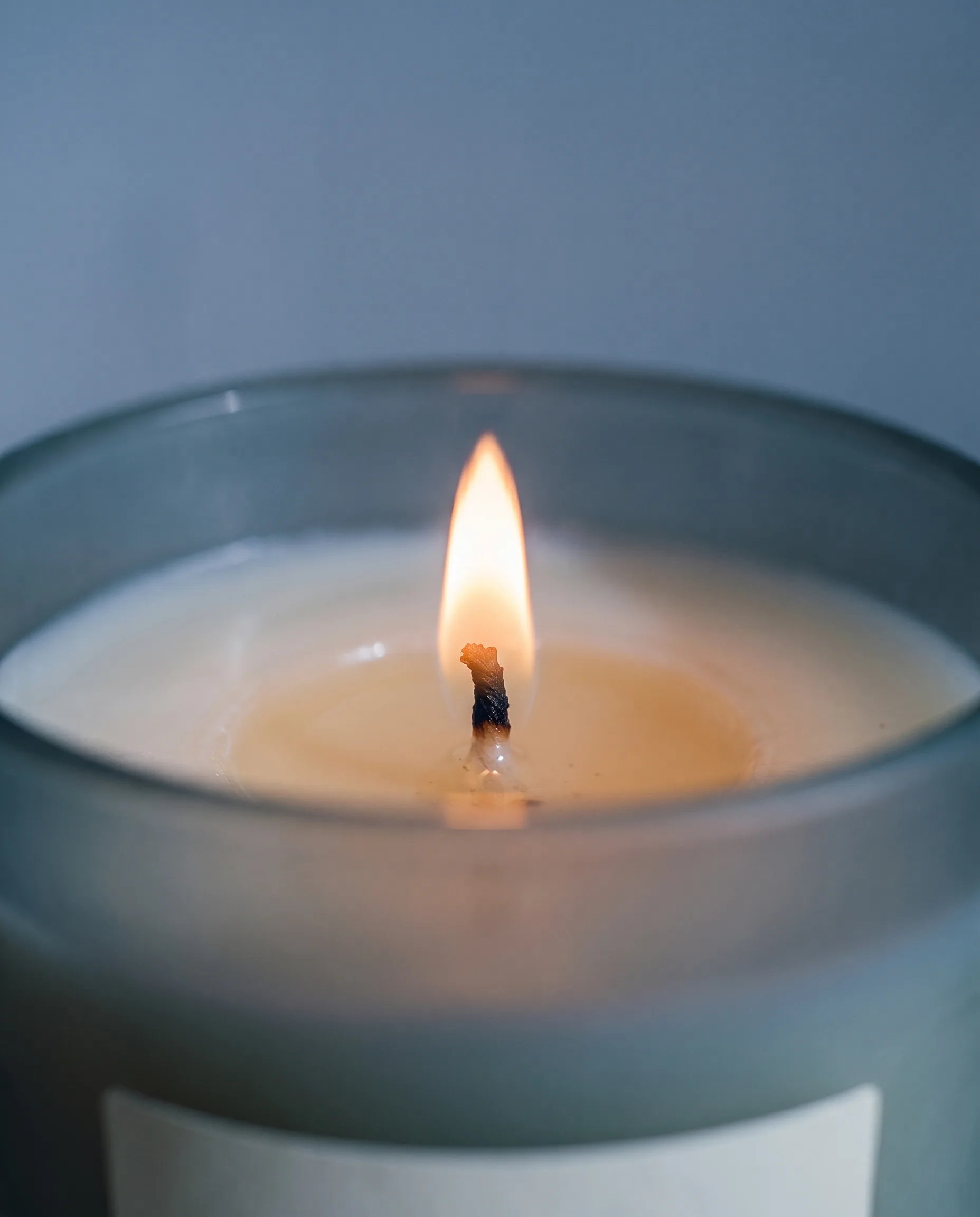
Burn safety — every candle
A lit candle is an open flame. These rules apply to every candle we sell, and to every candle you own. They are printed on the base label and on the card in the box as well.
Do
- Stay in the room. Put the candle out before you leave, and before you go to sleep.
- Burn on a stable, heat-resistant surface, at least 12 inches from anything that can catch — curtains, books, shelves overhead, paper, dried flowers.
- Keep candles out of reach of children and pets, and away from drafts, fans and open windows.
- Keep the wax pool clear of match ends, wick trimmings and anything else that could flare.
- Stop when 1/2 inch of wax remains in a container, or 2 inches from the holder for beeswax.
Do not
- Never leave a burning candle unattended, and never burn one while you sleep.
- Never move a candle while it is lit or while the wax is still liquid — the vessel is hot and the wax can burn skin.
- Never use water to put out a candle. Wax spits and the glass can crack.
- Never burn several candles touching each other; the heat from one softens and overheats the next.
- If the flame is taller than about 1 inch, flickers hard or smokes, put it out, let it cool, trim the wick and relight.
Soy candles in glass, ceramic and tin
Soy wax has a memory. The first burn decides the shape of every burn after it: if the wax is put out before it melts all the way to the edge, it tunnels down the middle and never recovers. Everything else here is about a steady, clean flame.
Do
- First burn: let the melt pool reach the edge — about 2 to 3 hours for an 8 oz candle, 1 1/2 to 2 hours for a 4 oz tin, about 3 hours for the three-wick.
- Trim the wick to 1/4 inch before every burn, when the candle is cold. A long wick smokes and blackens the glass.
- Burn for no more than 4 hours at a time, then let the candle cool completely before relighting.
- Light all three wicks of the three-wick candle together, and keep them burning together.
- Put it out with a snuffer, or dip the wick into the melted wax and straighten it. Put the lid on only once the flame is out.
Do not
- Do not burn past the last 1/2 inch of wax — the base of the vessel can overheat and crack, or scorch what it stands on.
- Do not put the brass lid on a lit candle, and do not pack a tin until the wax has set hard.
- Do not leave a candle in direct sun or a hot car. Soy wax softens, and the fragrance fades.
- Do not worry about frosting or wet spots against the glass. Both are natural to soy wax and do not change how it burns.
Beeswax tapers and pillars
Beeswax has no vessel, so the holder or plate is part of the safety. It is dense, burns slowly and drips little in still air — moving air is what makes any taper drip.
Do
- Cut the wick joining a taper pair, then trim each wick to 1/4 inch before lighting.
- Set tapers straight and firmly in a holder made for tapers. Wrap the base in a little foil if it is loose.
- Burn a pillar on a heat-resistant plate or stand that is wider than the pillar.
- Let a pillar's melt pool spread to within about 1/4 inch of the edge on each burn so it hollows evenly.
- Buff away the pale bloom that beeswax develops over time with a soft cloth.
Do not
- Do not burn a taper that leans. It drips down one side and can fall.
- Do not burn below 2 inches from the holder or plate.
- Do not store beeswax in a hot room or a sunny window — it softens and bends.
Reed diffuser and room mist
No flame, but not without rules. Diffuser oil is a combustible liquid and the room mist contains alcohol and is flammable. Neither is for skin.
Do
- Diffuser: put the reeds in, flip them after an hour, then turn them about once a week.
- Stand the diffuser on a coaster or tray — the oil can mark varnished wood, paint and some plastics.
- Room mist: shake, then spray into the air or over fabric from about 12 inches. Test on a hidden area of delicate or light fabric first.
- Let the mist settle completely before lighting anything in the room.
- Store both upright, capped and out of direct sun.
Do not
- Never spray room mist near a lit candle, fireplace, stove, heater or any flame.
- Never put either on skin, hair or pets, and never spray towards the face.
- Do not place a diffuser beside a candle or a heat source, or where it can be knocked over.
- Keep both out of reach of children and pets. If swallowed, call Poison Control (1-800-222-1222) or a doctor; do not induce vomiting.
Brass tools and the match cloche
Brushed brass darkens and warms with handling. Leave it to age, or bring the brightness back with a soft cloth.
Do
- Trim wicks with the trimmer only when the candle is cold.
- Wipe soot from the trimmer blades and the snuffer bell with a dry cloth once they are cool.
- Keep the match cloche dry, and strike away from you.
Do not
- Do not touch the snuffer bell straight after use — it is hot.
- Do not use abrasive cleaners on the brass; they cut through the finish.
- Do not drop spent matches into a candle's wax pool. Keep matches out of reach of children.
If something has gone wrong anyway
Anything that arrives broken is replaced or refunded in full — send a photograph within 14 days and keep the packaging until we reply. If a candle is not burning the way this page describes, email us before you give up on it; most problems are a wick that needs trimming. See returns and refunds.
hello@auroracandleworks.com · (941) 218-8273 — Monday–Friday, 9:00am–5:00pm ET. Every message answered within one business day.